

The Louisiana Homeowner’s Guide to Controlling Mold, Moisture, and Musty Odors Indoors
Service Bee-yond Compare!

If you’ve lived in Northwest Louisiana for any length of time, you already know the humidity is no joke. It’s not just uncomfortable — it’s actively working against your home.
When indoor moisture levels stay elevated, mold finds a foothold, musty odors settle in, and air quality quietly suffers.
The Bossier City and Shreveport HVAC team at SBC Cooling + Heating works with homeowners across the area on exactly these problems, and the pattern is almost always the same: the moisture source isn’t obvious, and the damage quietly compounds until it’s a real issue.
Here’s what you need to know.
Why Louisiana Homes Are Especially Vulnerable
The average relative humidity in Northwest Louisiana hovers between 70 and 80 percent through much of the year, and that’s outdoors. When that air works its way into your home through gaps, doors, windows, and ductwork, it brings all that moisture with it.
Mold doesn’t need much to grow. Give it a surface, some organic material (drywall, wood framing, carpet fibers), and humidity above 60 percent, and it’s off to the races. In Louisiana, hitting that threshold happens fast, especially in spaces with limited airflow like closets, crawl spaces, bathrooms, and attics.
The tricky part: you often won’t see the mold. You’ll smell it first.
What That Musty Smell Is Actually Telling You
A musty or earthy odor is typically the byproduct of mold or mildew releasing microbial volatile organic compounds (MVOCs) as they grow. It’s essentially mold off-gassing, and it usually means there’s active growth somewhere, even if you can’t see it.
Common hiding spots in Louisiana homes:
- Inside ductwork and air handlers
- Behind drywall in bathrooms or laundry rooms
- Under sinks and around supply lines
- In crawl spaces and unconditioned attics
- Around window frames with poor sealing
- In wall cavities near exterior-facing walls
If the smell is strongest near your vents, that’s a big clue your HVAC system may be circulating mold spores throughout the house.
The HVAC Connection Most Homeowners Miss
Your air conditioner does more than cool the air — it dehumidifies it. As warm air passes over the evaporator coil, moisture condenses and drains out. That’s the system working as designed.
But when the AC isn’t running efficiently, or isn’t sized correctly for your home, it may not be removing enough moisture. An oversized unit that short-cycles (runs in brief, frequent bursts) is a common culprit. It cools the air quickly but doesn’t run long enough to pull out the humidity.
Other HVAC-related moisture problems include:
- Dirty or clogged coils that limit condensation
- Blocked or slow drain lines that cause water to back up
- Leaky ductwork that pulls humid attic or crawl space air into your living spaces
- Air filters so clogged they restrict airflow and reduce dehumidification
Staying current on AC maintenance is one of the most direct ways to keep your system dehumidifying effectively. A tech can catch a slow drain line or dirty coil before it turns into a moisture problem inside your walls.
Whole-Home Humidity Control: When the AC Isn’t Enough
In Louisiana, air conditioning alone often can’t keep up with the moisture load, especially during shoulder seasons when it’s warm but not hot enough to run the AC continuously.
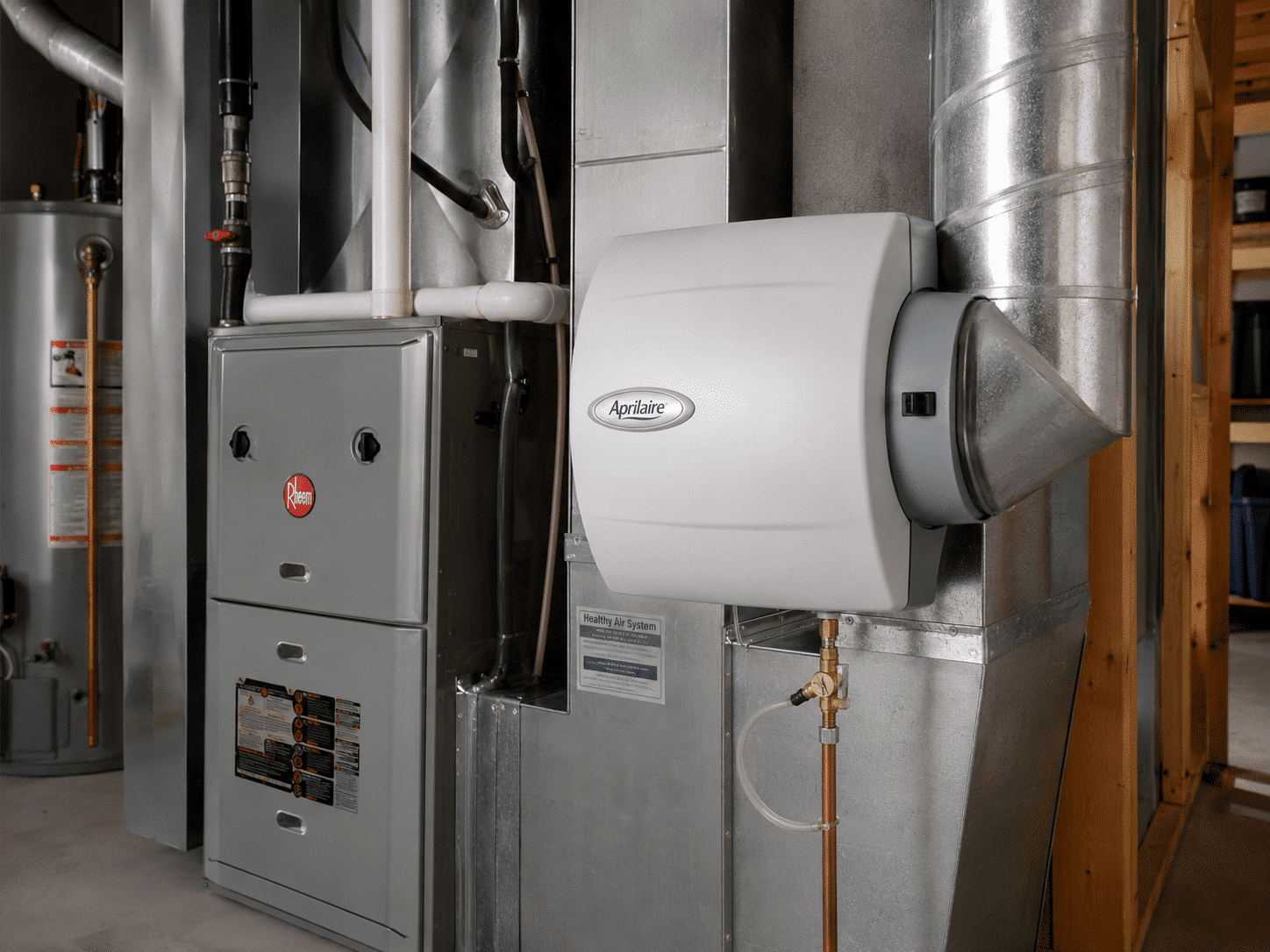
A whole-home dehumidifier integrates directly into your HVAC system and runs independently of the cooling cycle. It pulls air through, strips the moisture, and returns drier air to the house. Unlike portable units, it handles the whole house consistently and doesn’t require you to empty a bucket.
A good target for indoor relative humidity is between 40 and 50 percent. Above 60 percent, mold risk climbs quickly. Below 30 percent, you start dealing with dry skin and static electricity, but in Louisiana, that’s rarely the problem.
What You Can Do Right Now
Some moisture control steps don’t require a service call:
- Check your bathroom exhaust fans. Run them during and for 15 to 20 minutes after showers. If the fan doesn’t pull steam out quickly, it may need to be replaced or cleaned.
- Look at your dryer vent. It should exhaust to the outside. A clogged or disconnected dryer vent dumps heat and moisture directly into your home.
- Inspect around windows and doors. Air sealing gaps with weatherstripping or caulk keeps humid outdoor air from infiltrating your conditioned space.
- Keep interior doors open. Closed-off rooms with poor airflow are mold’s preferred real estate.
- Use exhaust fans in the kitchen, too. Steam from cooking contributes more to indoor humidity than most homeowners realize.
Air Quality and Filtration
Once you’ve addressed the moisture source, improving your indoor air quality helps manage what’s already airborne. High-quality air filtration can capture mold spores before they settle and recirculate. Depending on your system, options range from upgraded MERV-rated filters to more advanced air filtration systems that handle a broader range of particles.
It’s worth noting that filtration treats the symptom, not the source. If you have active mold growth somewhere in the house, filtering the air won’t eliminate it. You need to deal with the moisture conditions that are feeding it.
When to Call a Professional
If you’re dealing with persistent musty odors, visible mold growth, or condensation showing up on walls or windows consistently, it’s time to have your HVAC system evaluated. The issue may be as straightforward as a maintenance problem with your existing equipment, or it may point to a bigger mismatch between your system’s capacity and your home’s humidity load.
The SBC Cooling + Heating team serves Bossier City, Shreveport, and the surrounding area, and this kind of diagnostic work is exactly what we do. Reach out to schedule an appointment and we can take a look at your Shreveport or Bossier City HVAC system and help you figure out what’s actually going on.
Call (318) 465-0853Service Areas
Serving Caddo Parish, Bossier Parish & Bee-yond!
 All Service Areas